Introduction
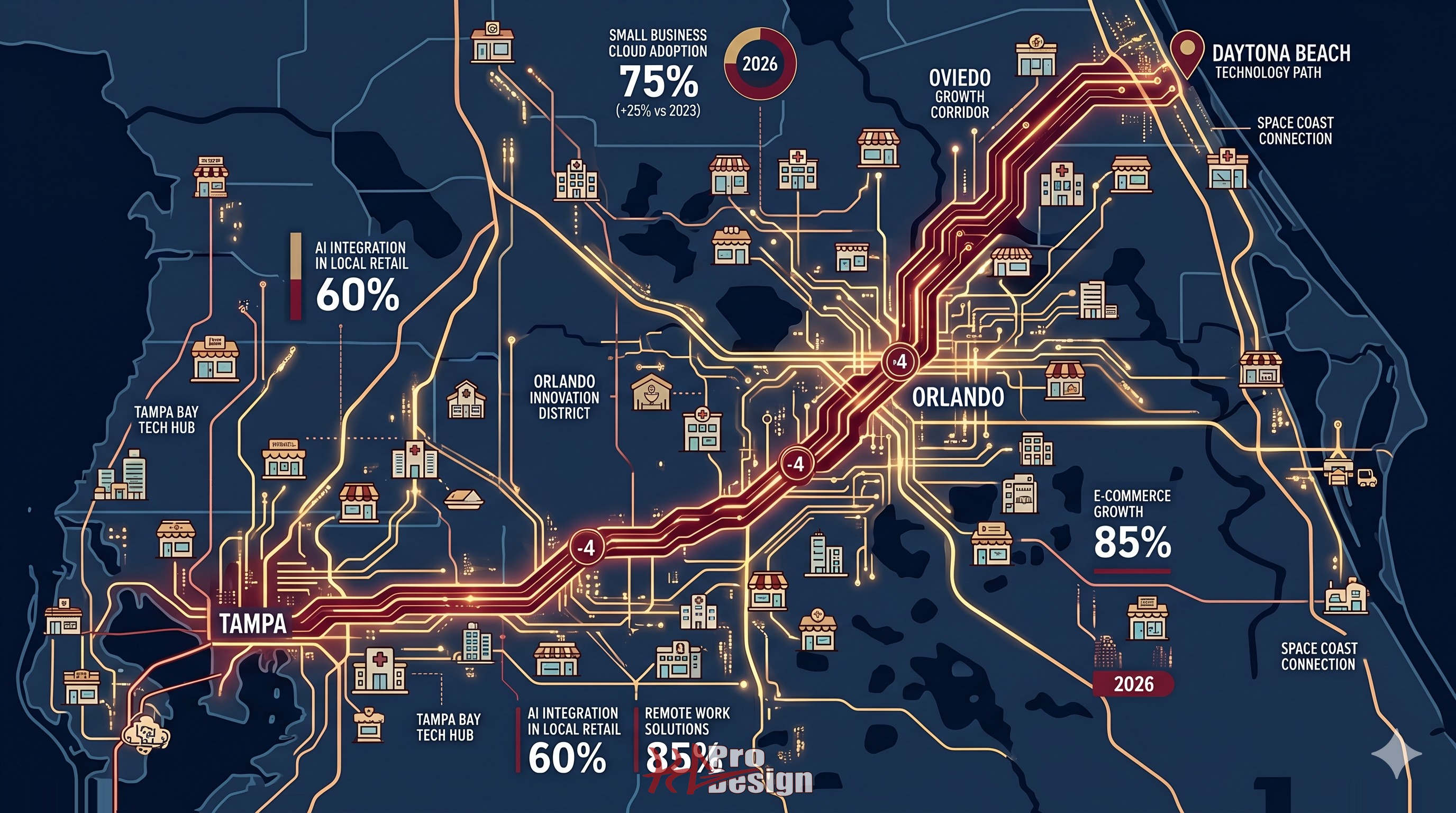
Central Florida small businesses are at a technology inflection point. The I-4 corridor from Tampa to Daytona Beach is one of the fastest-growing business regions in the Southeast, and the companies thriving in 2026 are not the ones with the biggest budgets. They are the ones making smarter technology decisions.
We work with small businesses across this corridor every week, from our home base in Oviedo to client meetings in Tampa, Orlando, and everywhere in between. The patterns are clear. Businesses that invested in the right technology over the past two years are pulling ahead of competitors who are still relying on spreadsheets, generic website builders, and disconnected software tools.
This is not a trend piece about futuristic technology. This is a ground-level look at what is actually working for small businesses in Central Florida right now, based on what we are seeing in real client engagements and conversations with business owners across the region.
The Central Florida Tech Landscape in 2026
Oviedo and Seminole County: The Quiet Tech Hub
Oviedo has grown from a small residential community into a legitimate business center, and the technology adoption among local businesses reflects that growth. The restaurants, professional services firms, and retail shops along Alafaya Trail and in the Oviedo on the Park district are investing in custom digital tools at a rate that would have been unthinkable five years ago.
Winter Springs and Casselberry small businesses are following the same trajectory, adopting digital appointment scheduling, automated follow-up systems, and custom client portals that reduce the administrative burden on small teams. A service business owner in Winter Springs told us recently that automating their intake process saved them roughly ten hours per week in manual data entry.
Lake Mary's established tech corridor has had a ripple effect on the surrounding communities. The presence of major tech employers has created a workforce that expects digital-first experiences, which means the local businesses serving those workers and their families need to meet higher expectations. Small businesses in Sanford's revitalized downtown are responding by investing in modern websites and digital marketing infrastructure that matches the quality of the national brands their customers interact with daily.
The common thread across Seminole County is practical technology adoption. These are not businesses chasing trends. They are solving real operational problems with targeted solutions.
Orlando and Orange County: Beyond Tourism
Orlando's economic identity has shifted dramatically. While theme parks and hospitality remain central to the regional economy, the city's diversification into healthcare technology, defense and simulation, and financial services has created a business landscape that demands sophisticated technology infrastructure.
Winter Park's boutique businesses are a prime example. The retail shops, galleries, and professional services firms along Park Avenue serve a discerning clientele that expects polished digital experiences. Generic template websites no longer cut it in this market. These businesses are investing in custom e-commerce, appointment booking systems, and client portals that reflect the premium positioning of their brands.
In Maitland, small industrial and professional services companies are going digital in ways that directly impact their bottom line. Custom quoting systems, project management dashboards, and automated invoicing are replacing manual processes that consumed hours of staff time every week. Apopka's growing base of construction, landscaping, and agricultural businesses is making similar investments, building custom tools for estimating, scheduling, and client communication.
The luxury services market in Dr. Phillips and Windermere presents its own set of requirements. High-end home services, wealth management firms, and specialty medical practices in these communities need web presences that convey exclusivity and trust. That means custom design, sophisticated content strategy, and integrations with CRM and scheduling systems that create a seamless client experience from first visit to ongoing engagement.
Tampa Bay: The Growth Engine
Tampa's transformation into a major technology hub has been one of the defining stories of Florida's business landscape. The city's fintech sector has exploded, healthcare technology companies are scaling rapidly, and the creative economy is generating demand for digital tools that did not exist three years ago.
St. Petersburg's creative and small business economy has embraced digital transformation with particular enthusiasm. Design studios, marketing agencies, and independent retailers are building custom web applications that differentiate them from competitors in an increasingly crowded market. The city's walkable downtown and strong local identity have created a business environment where custom technology is seen as a competitive necessity rather than a luxury.
Clearwater and Brandon's service-based businesses are adopting automation at scale. HVAC companies, plumbing services, and home cleaning businesses are building custom scheduling and dispatch systems that optimize routes, manage technicians, and communicate with customers automatically. Lakeland's logistics and distribution companies are investing in custom software for inventory management, order tracking, and fleet coordination, replacing the patchwork of spreadsheets and off-the-shelf tools that slowed them down.
Technology Trends Working for Local Businesses
AI-Powered Customer Service
The single most impactful technology trend we are seeing across Central Florida small businesses is the adoption of AI-powered customer service tools. This is not about replacing human interaction. It is about ensuring that no customer inquiry goes unanswered, even at 11 PM on a Saturday.
Chatbots and virtual assistants handle after-hours inquiries for service businesses that used to lose leads overnight. Appointment scheduling automation has eliminated the back-and-forth phone tag that frustrated both businesses and customers. Automated follow-up sequences nurture leads that would have gone cold after a single unreturned call.
The businesses seeing the biggest returns are the ones integrating AI tools into their existing workflows rather than bolting them on as afterthoughts. A medical practice does not need a generic chatbot. They need an AI assistant that understands their services, can answer insurance questions, and books appointments directly into their scheduling system.
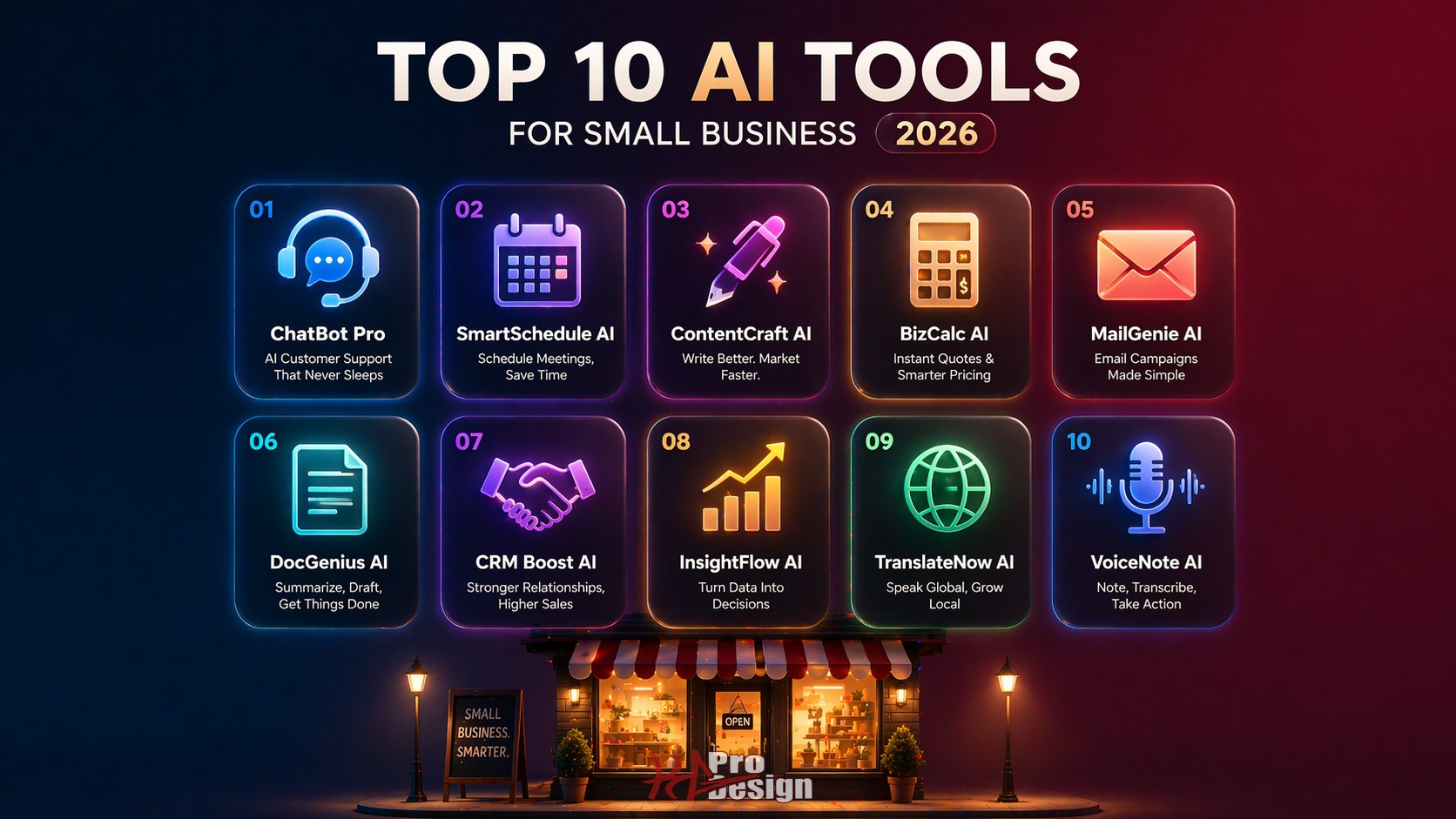
We cover the specific AI tools making the biggest difference for small businesses in our guide to the top AI tools for small businesses in 2026, including recommendations for different industries and budgets.
Custom Web Applications
The shift from template websites to custom web applications is happening across every industry in Central Florida. This goes beyond aesthetics. Business owners are building applications that automate core operations, reduce labor costs, and create competitive advantages that template websites cannot replicate.
A property management company does not just need a website. They need a platform that handles tenant applications, maintenance requests, payment processing, and owner reporting. A fitness studio does not just need a landing page. They need a system that manages memberships, schedules classes, tracks attendance, and processes payments, all from a single custom-built interface.
These are the types of projects that drive measurable ROI, and they are the bread and butter of custom software development in the Central Florida market.
Cloud-Based Operations
Remote and hybrid work arrangements are a permanent part of the Central Florida business landscape. Even businesses that require on-site staff for daily operations benefit from cloud-based tools that provide flexibility and resilience.
For Seminole County businesses, cloud-based operations mean that a storm closing the office does not close the business. Teams can access project files, customer records, and communication tools from anywhere. Cloud-based inventory management keeps stock levels accurate across multiple locations. Project management platforms keep distributed teams aligned without relying on in-person status meetings.
Hurricane preparedness has taken on new importance for Florida business technology planning. Businesses that moved critical operations to cloud infrastructure before recent storm seasons experienced minimal disruption, while competitors relying on local servers and paper records faced days or weeks of recovery time.
POS and Online Ordering Integration
Restaurants from Kissimmee to Daytona Beach are connecting their online presence to their POS systems in ways that streamline operations and increase revenue. The days of managing separate systems for dine-in orders, online orders, and delivery are ending.
Custom website integrations that sync with SkyTab, Toast, Square, and other POS platforms give restaurant owners a single source of truth for their operations. Menu updates happen once and propagate everywhere. Orders flow directly into the kitchen without manual re-entry. Inventory adjusts in real time across all channels.
Multi-location restaurant groups are seeing the biggest benefits, managing centralized menus, pricing, and promotions across locations in different cities while still allowing location-specific customization. We explored one restaurant group's experience in detail in our article on how restaurant automation saved 15 hours per week.
Challenges Unique to Central Florida Businesses
Technology adoption in Central Florida comes with challenges that businesses in other regions do not face.
Seasonal fluctuations dominate planning for any business connected to tourism or the snowbird population. A restaurant in Kissimmee needs systems that scale up during peak season and scale down during summer without wasting money on unused capacity. A retail shop in St. Cloud needs marketing automation that adjusts messaging and ad spend based on seasonal traffic patterns.
Hurricane preparedness is not optional. Every technology decision should account for the possibility of multi-day power outages, internet disruptions, and physical damage to business locations. Cloud-based infrastructure, offline-capable applications, and automated backup systems are requirements, not nice-to-haves.
Competition for technical talent in the Orlando and Tampa markets makes it difficult for small businesses to hire in-house developers. This drives demand for consulting partnerships with local development firms that can provide expertise without the overhead of full-time technical hires.
Growth management along the I-4 corridor expansion creates both opportunity and complexity. Businesses expanding from one location to multiple sites need technology that scales gracefully, from a single-location POS and website to a multi-location platform with centralized management and location-specific content.
How Local Businesses Are Investing in Tech
The most successful small businesses in Central Florida are following a consistent pattern in their technology investments.
Customer-facing digital experiences come first. Before optimizing internal operations, they are making sure their website, online ordering, scheduling, and communication tools create a professional, friction-free experience for customers. This is the highest-ROI investment for most small businesses because it directly impacts revenue.
Back-office automation follows. Once the customer experience is solid, they automate the repetitive tasks that consume staff time: invoicing, reporting, inventory updates, appointment reminders, and follow-up communications. These automations compound over time, freeing up hours every week that can be redirected to growth activities.
Mobile-first strategy is non-negotiable. Central Florida's population skews heavily toward mobile device usage. A majority of local business searches now happen on smartphones. Businesses that treat mobile as an afterthought are invisible to the majority of their potential customers.
Custom solutions replace SaaS patchwork. Many businesses start with a collection of SaaS tools, one for scheduling, another for invoicing, a third for email marketing, a fourth for customer management. Eventually, the cost and complexity of managing five or six disconnected tools exceeds the cost of building a single custom platform that handles everything in one place. That is the tipping point where custom software development and automation become the smart financial decision.
Ready to Upgrade Your Business Technology?
From Oviedo to Tampa, the businesses that are investing in the right technology today will be the ones leading their markets tomorrow. The tools are more accessible than ever, and the cost of doing nothing continues to rise as competitors adopt solutions that make them faster, more efficient, and more visible to customers.
If you are a Central Florida business owner evaluating your technology options, we would welcome the conversation. At KG ProDesign, we help small businesses across the region build custom solutions that solve real problems and deliver measurable returns.
Contact us to discuss your project, or get started with a free consultation to explore what is possible for your business.