Introduction
"Isn't React just another JavaScript framework that will be replaced next year?"
We hear this question regularly from clients who are understandably cautious about technology investments. The JavaScript ecosystem has a reputation for churn, and nobody wants to invest in a platform only to find themselves on an unsupported stack two years later.
After 18 years of building software and evaluating every major frontend framework as it emerged, we have settled on React combined with TypeScript as our default technology choice for client projects. This is not a casual preference or a bandwagon decision. It is a deliberate, experience-driven conclusion based on what consistently delivers the best outcomes for the people and businesses we serve.
This article explains the reasoning, both the technical factors and the business ones, behind that decision. We will also be honest about the situations where React and TypeScript might not be the right fit, because giving you a complete picture is more important to us than selling you on our stack.
Why React
The Ecosystem Advantage
React has the largest ecosystem of any frontend framework. The npm registry contains more React-compatible packages than any alternative. For virtually any UI problem you can describe, there is a battle-tested React library that solves it.
This matters for client projects in a practical, dollars-and-cents way. A large ecosystem means our developers spend less time writing custom solutions for common problems and more time building the features that are unique to your business. Need a date picker with accessibility support? A data visualization library? A drag-and-drop interface? These exist as mature, well-documented React packages with active maintenance.
The hiring ecosystem is equally important. React has the largest pool of qualified developers of any frontend framework. If your organization eventually wants to bring development in-house or hire additional developers to extend the application, you will find React developers more readily than specialists in any other framework. This is not a minor consideration. It is a significant factor in the long-term maintainability of your investment.
Finally, React is now governed by the React Foundation under the Linux Foundation, with Meta as a founding Platinum member. This independent governance structure ensures the framework's longevity beyond any single company's priorities. React is used in production by companies ranging from Netflix to Airbnb to the New York Times, receives consistent investment and regular updates, and has a strong track record of backward compatibility. React is not going anywhere.
Component Architecture
React's component model is not just a technical implementation detail. It is a design philosophy that makes applications easier to build, test, and maintain.
Every piece of a React interface is a self-contained component with its own logic, styling, and state. A button is a component. A navigation menu is a component. An entire checkout flow is a component composed of smaller components. This composability means that once we build a component for one part of your application, we can reuse it everywhere else that component is needed, with the confidence that it will behave consistently.
For clients, this translates to faster development after the initial components are established. The first few weeks of a project involve building a component library. Every subsequent feature built on top of that library goes faster because the foundational pieces already exist and are tested.
This pattern also makes onboarding new developers to an existing codebase significantly easier. Rather than needing to understand the entire application at once, a new developer can work on individual components in isolation, understanding their inputs and outputs without needing full context of the surrounding system.
Flexibility Without Lock-In
React is a library, not a full framework. It handles the view layer and gets out of the way for everything else. This is a feature, not a limitation.
React does not dictate your state management strategy, your routing approach, your styling methodology, or your backend technology. You can pair React with any backend language, any database, and any hosting platform. This flexibility means that your React frontend is genuinely portable. If you ever decide to change your backend technology, swap your hosting provider, or restructure your data layer, the React frontend continues to work without modification.
This flexibility extends to the range of applications React can power. We use React for single-page applications, server-rendered websites, static sites, and even mobile applications through React Native. One framework, one set of patterns, one body of expertise applied across the full spectrum of projects our clients bring to us.
Why TypeScript
Catching Bugs Before They Ship
The single most compelling argument for TypeScript is that it catches entire categories of bugs at compile time rather than in production. When a function expects a string and receives a number, TypeScript flags the error in the developer's editor before the code is ever deployed. When an object is missing a required property, TypeScript surfaces the problem during development, not when a user encounters a crash at two in the morning.
This matters more than it might seem. Production bugs are expensive. They require diagnosis time, hotfix development, testing, deployment, and sometimes customer communication and damage control. A bug caught by TypeScript during development costs minutes. The same bug discovered in production can cost hours or days, plus whatever reputational damage it inflicts.
Refactoring, the process of restructuring existing code to improve its design, is dramatically safer with TypeScript. When you rename a property, change a function signature, or restructure a data model, TypeScript identifies every location in the codebase affected by that change. Without type safety, refactoring is a high-anxiety activity that developers avoid, and the code gradually calcifies into a structure that nobody wants to touch. With TypeScript, refactoring is routine and confident.
Better Developer Experience
TypeScript transforms the development experience in ways that directly impact productivity.
Autocomplete and IntelliSense in modern code editors become extraordinarily accurate with TypeScript. When a developer types a variable name followed by a dot, the editor immediately shows every property and method available on that object, with documentation and type signatures. This eliminates constant trips to reference documentation and reduces the cognitive load of working with unfamiliar code.
For new team members joining a project, TypeScript acts as living documentation. The type definitions describe what data structures look like, what functions expect and return, and how components are configured. Rather than reading through pages of documentation that may or may not be current, a developer can inspect the types to understand exactly how the code works. This accelerates onboarding from weeks to days.
API contracts between the frontend and backend are enforced at the code level. When the backend changes the shape of a response, the TypeScript types surface every location in the frontend that needs to be updated. Without this, API changes are a common source of subtle bugs that only appear in specific user flows.
Industry Momentum
TypeScript is not an experiment or a niche tool. It is the established default for professional JavaScript development.
The vast majority of new React projects start with TypeScript. Major libraries ship first-class TypeScript definitions. Framework tooling like Vite, Next.js, and Remix includes TypeScript support out of the box. When we hire developers, proficiency in TypeScript is a baseline expectation, not a differentiator.
This momentum means that investing in a TypeScript codebase is investing in the direction the industry is moving. The tooling will continue to improve, the talent pool will continue to grow, and the ecosystem will continue to mature around TypeScript as the primary language for frontend development.
The Business Case for Clients
Technology choices are ultimately business decisions. Here is why React and TypeScript make financial sense for the organizations we serve.
Lower Long-Term Maintenance Costs
The combination of TypeScript's compile-time error checking and React's component architecture produces codebases that are genuinely cheaper to maintain over time. Fewer production bugs means fewer emergency maintenance cycles. Well-structured components mean that changes are localized rather than cascading through the entire application. Type definitions mean that maintenance developers can understand the code without the original author being available to explain it.
We have seen clients reduce their annual maintenance spend by 30 to 40 percent after migrating legacy JavaScript applications to TypeScript. The upfront investment in type safety pays for itself within the first year through reduced bug-fixing costs alone.
Portability and No Vendor Lock-In
A React and TypeScript codebase is maintained by any qualified developer. You are not locked into KG ProDesign as your only option for future development. Any competent React developer can pick up a well-structured project and continue building on it. We see this as a strength of our approach, not a risk. We earn continued business by delivering quality work, not by creating dependency.
This portability protects your investment. If your business circumstances change and you decide to bring development in-house, hire a different agency, or transition to a freelancer, the codebase transfers cleanly.
Future-Proof Investment
React has been the dominant frontend framework for the better part of a decade. TypeScript adoption is accelerating year over year. Together, they represent the safest bet in frontend technology for a project that needs to be maintained and extended over the next five to ten years.
Frameworks rise and fall, but the investment we make in React and TypeScript today will be supported by a thriving community, regular updates, and a deep talent pool for the foreseeable future. We cannot make that claim with the same confidence about any other frontend technology.
When We Do Not Use React
Intellectual honesty is part of good consulting. React and TypeScript are our default, but they are not our dogma. There are situations where a different approach serves clients better.
Static content websites. A marketing site with five pages and a blog does not need a full React application. Tools like Astro or even well-structured static HTML can deliver faster load times, simpler hosting, and lower maintenance overhead. We recommend the right tool for the job, even when that tool is simpler than our specialty.
Embedded widgets. A single interactive component embedded in an existing website might be better served by vanilla JavaScript or a Web Component, avoiding the overhead of a React bundle for a small piece of functionality.
Native mobile applications where performance is critical. While React Native is excellent for cross-platform mobile development, applications with demanding performance requirements around animation, real-time processing, or hardware integration may benefit from native Swift or Kotlin development.
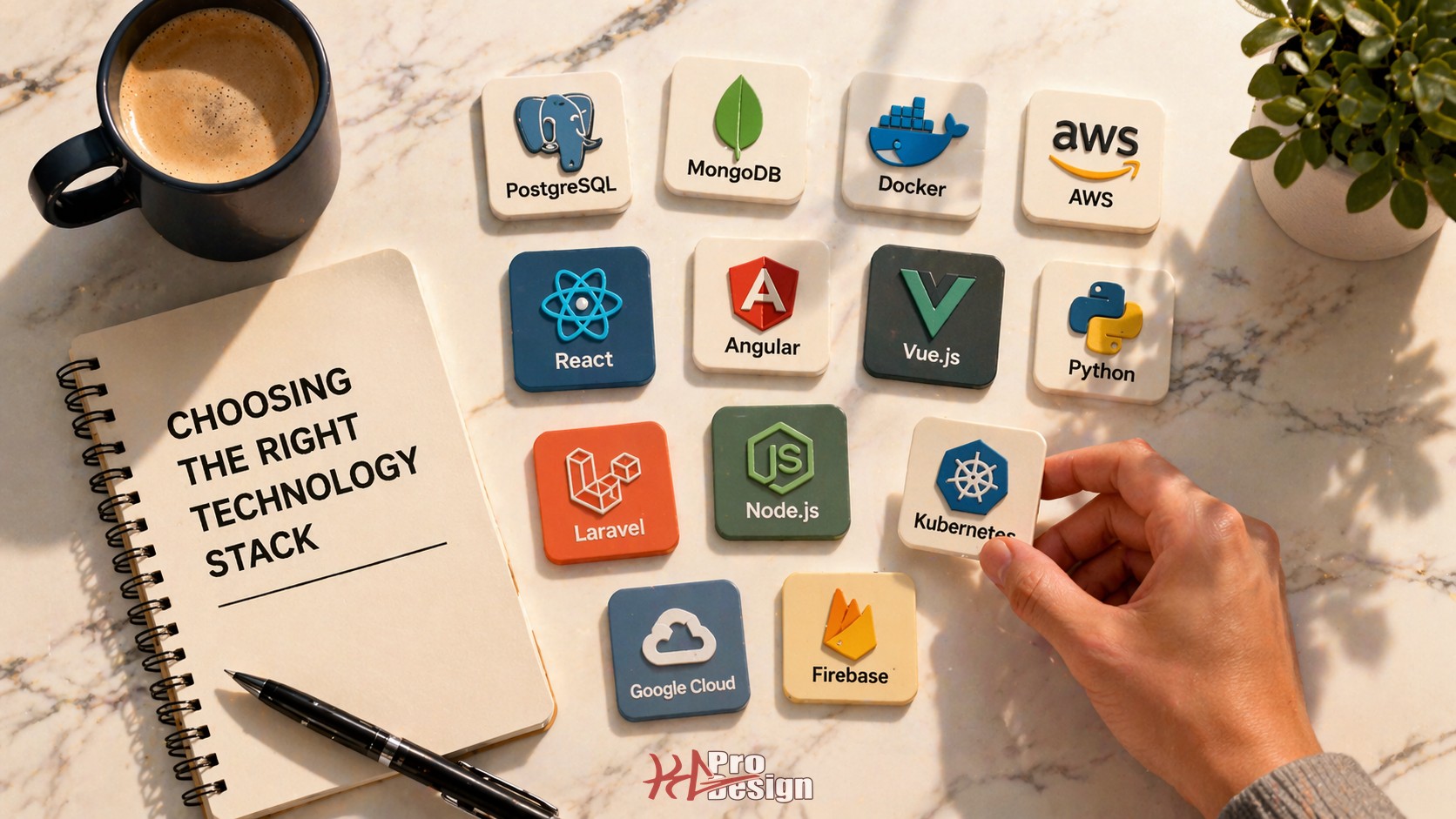
Being transparent about these exceptions is important. Our goal is to give you the right solution, not to use every project as an opportunity to practice our preferred stack. For a deeper discussion of technology selection, see our guide on choosing the right technology stack.
Our React and TypeScript Stack in Practice
For transparency, here is the specific toolset we use on top of React and TypeScript for most client projects. This is the stack powering the very website you are reading right now.
- Vite for build tooling. It provides instant development server startup and fast production builds.
- Tailwind CSS for styling. Utility-first CSS delivers consistent design without the overhead of writing custom stylesheets.
- React Router for navigation. Client-side routing that keeps the application fast and responsive.
- Zod for runtime validation. TypeScript catches type errors at compile time. Zod catches invalid data at runtime, particularly important for API responses and form submissions.
- Vitest and Playwright for testing. Unit tests for individual functions and components, end-to-end tests for complete user workflows.
This stack is opinionated but not rigid. We adapt the specific tools to client needs while maintaining the React and TypeScript foundation that has proven itself across hundreds of projects.
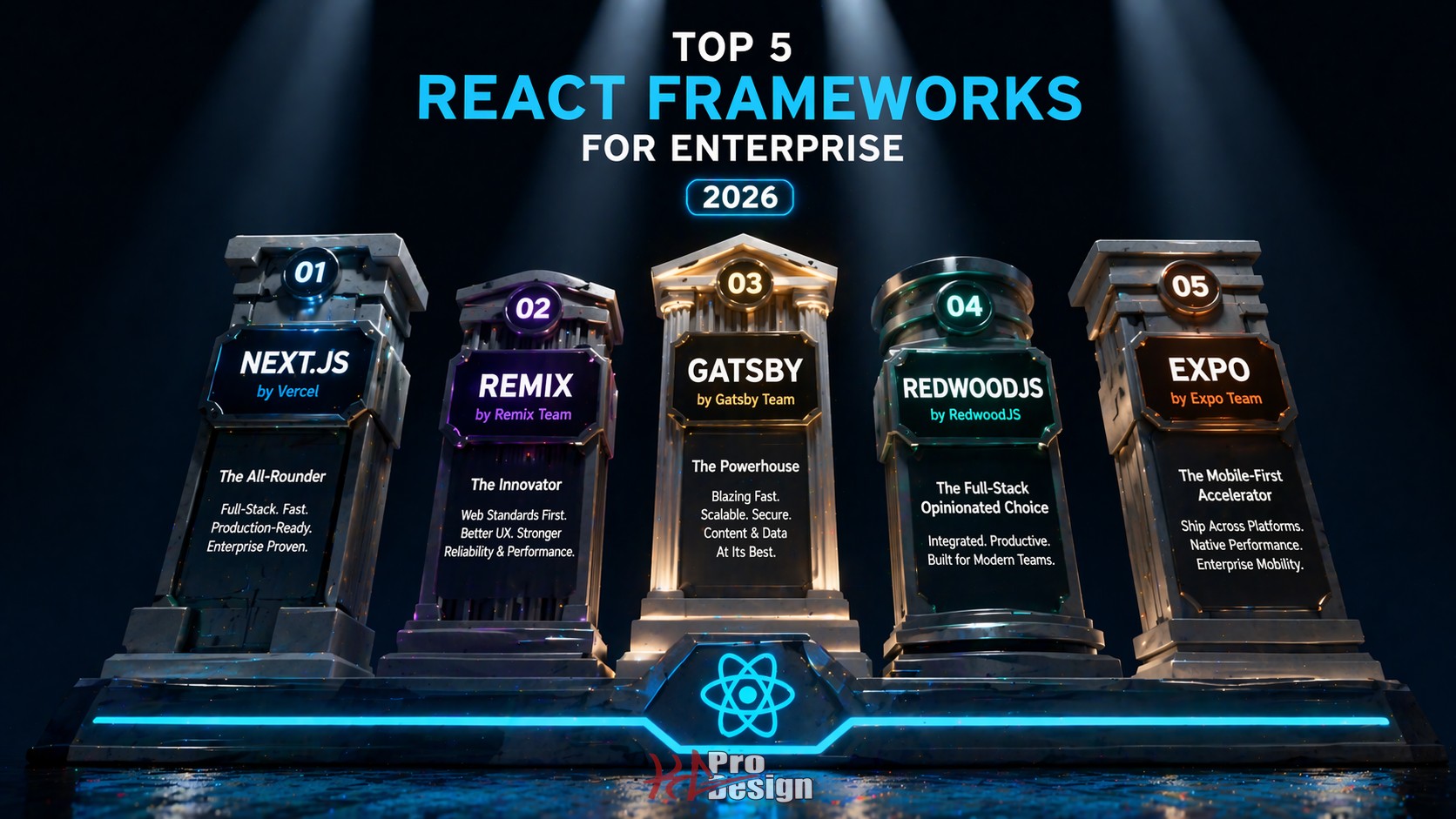
For a deeper technical exploration of building production-grade React applications, our article on building scalable React applications covers architecture patterns and performance optimization strategies in detail. For a comparison of modern React meta-frameworks, see our guide to top React frameworks for enterprise in 2026.
Ready to Build With Confidence?
Technology decisions should be made with full information, not marketing pressure. If you are evaluating frameworks for an upcoming project and want a candid conversation about what makes sense for your specific requirements, we are happy to help, even if the answer is not React.
Explore our software development services to see how we approach client projects, or contact us to discuss your technology needs.