Introduction
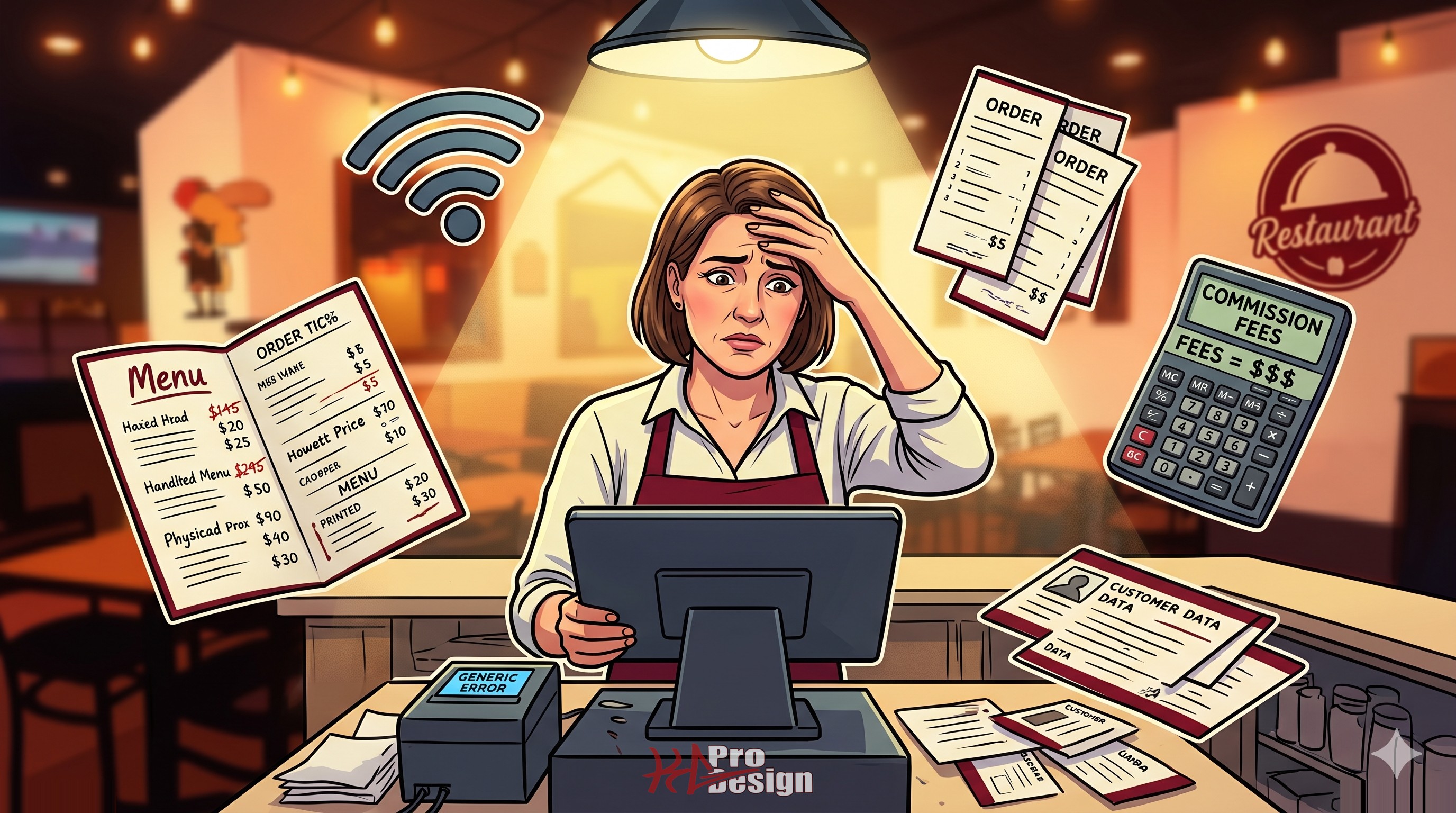
Your POS system handles transactions, but it probably creates as many problems as it solves. Every restaurant owner we talk to has a version of the same story: the POS does one thing well -- ringing up orders -- and everything else feels like a workaround.
As web developers who build restaurant websites that integrate with every major POS system, we hear the same complaints from owners using SkyTab, Toast, Square, Clover, and others. The specific system varies, but the frustrations are remarkably consistent.
The good news is that these five pain points are not just common -- they are solvable. And in most cases, the fix does not require replacing your POS. It requires building the right web infrastructure around it.
The 5 Pain Points
1. Your Website and POS Do Not Talk to Each Other
This is the most expensive pain point on the list, and it is hiding in plain sight.
The Problem: A customer places an order through your website. That order does not flow into your POS automatically. Instead, someone on your staff has to read the online order off a screen -- or worse, off a printed ticket -- and manually key it into the POS terminal. Every manual entry is a chance for a mistake: wrong item, wrong modifier, wrong price.
Menu changes make it worse. When you update pricing or add a seasonal item, you need to make that change in your POS, on your website, on Google Business Profile, on Yelp, and on every third-party delivery platform. Miss one, and customers see different prices depending on where they look.
The Revenue Impact: Manual order re-entry slows down your kitchen during peak hours. Price discrepancies between your website and your POS erode customer trust. One bad online ordering experience is enough to send a customer to a competitor permanently.
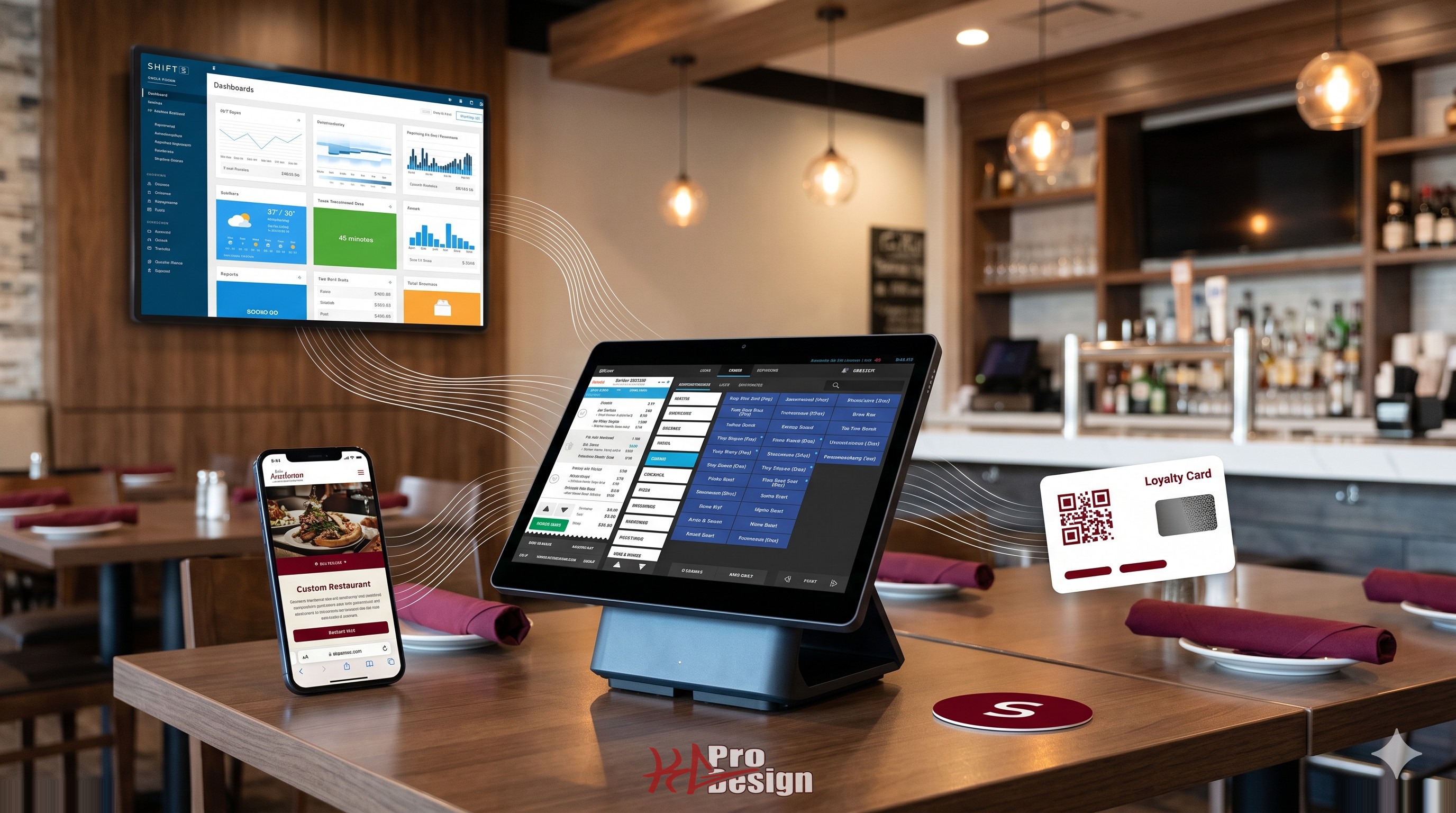
The Fix: A custom-built website with direct POS API integration eliminates manual re-entry entirely. Online orders flow straight into your kitchen display system through your POS, just like dine-in orders. Menu updates sync automatically.
We build restaurant websites that connect directly to your POS -- whether that is SkyTab, Toast, Square, or another system. The technology exists. Most restaurant owners just do not know it is an option.
2. Reporting Is a Nightmare
The Problem: Your POS collects a massive amount of data -- every transaction, every item sold, every hour of every day. But getting that data out in a useful format feels like pulling teeth.
POS reports are typically rigid. You get the reports the system was designed to generate, and if you need something different -- comparing weekday lunch sales to weekend brunch, tracking the performance of a new menu item, or combining POS data with labor costs from your scheduling software -- you are stuck exporting CSVs and building spreadsheets manually.
The Revenue Impact: Restaurants that make data-driven decisions about menu engineering, staffing, and marketing consistently outperform those that rely on gut instinct. When your data is locked inside your POS and difficult to access, you are making decisions in the dark. That seasonal menu item you kept for three months too long? Better reporting would have told you to cut it in week two.
The Fix: A custom reporting dashboard that pulls data from your POS via its API and combines it with data from other sources -- labor, marketing, reservations -- gives you the complete picture. Automated daily and weekly reports mean you spend five minutes reviewing numbers instead of an hour building spreadsheets.
The key insight is that your POS data is valuable, but it is only part of the story. Custom dashboards that aggregate data from multiple sources turn fragmented information into actionable intelligence.
3. Third-Party Delivery Commissions Are Eating Your Margins
The Problem: DoorDash, UberEats, and Grubhub charge 15-30% commission on every order. On a $50 delivery order, you are giving up $7.50 to $15.00 before you account for food cost, labor, or packaging. For many restaurants, third-party delivery orders are either break-even or outright unprofitable.
The math gets worse when you consider that these platforms own the customer relationship. The customer ordered from DoorDash, not from your restaurant. You do not get their email address. You cannot send them a promotion. You cannot build loyalty. You are renting customers at a steep price.
The Revenue Impact: A restaurant doing $10,000 per month in third-party delivery orders at an average 25% commission is paying $2,500 per month -- $30,000 per year -- in fees. That is money that could fund a kitchen upgrade, a marketing campaign, or simply go to your bottom line.
The Fix: Your own online ordering system on your own website. Direct orders mean zero commission fees, and you own the customer data -- their email, their order history, their preferences. You can still list on third-party platforms for discovery, but your website becomes the primary ordering channel.
A well-designed online ordering system on your own website, integrated with your POS, gives customers the convenience they expect while keeping the revenue where it belongs: in your business.
4. Menu Updates Are Time-Consuming
The Problem: Seasonal changes, price adjustments, daily specials, 86'd items -- your menu is a living document. But updating it means touching five or six different systems: your POS, your website, your Google Business Profile, your Yelp listing, and every third-party delivery app.
Most restaurant owners or managers spend hours on menu updates that should take minutes. And if an item is 86'd during service, the website and delivery apps still show it as available, leading to frustrated customers and wasted time handling cancellations.
The Revenue Impact: Delayed menu updates cost you in two ways. First, the labor time spent making the same change in multiple places. Second, the customer experience damage when someone orders an item online that your kitchen can no longer make. Every "sorry, we're out of that" is a small erosion of trust.
The Fix: A central menu management system that pushes updates to all channels simultaneously. Change a price once, and it updates on your POS, your website, Google, and your delivery platforms. Mark an item as 86'd, and it disappears from every ordering channel in real time.
This kind of integration requires a custom-built solution that sits between your POS and your public-facing channels. It is one of the most impactful investments a restaurant can make in operational efficiency.
5. You Cannot Track Customer Data Effectively
The Problem: Your POS processes hundreds or thousands of transactions per week, but those transactions are essentially anonymous. You know that someone bought two entrees and a bottle of wine on Tuesday night. You do not know who they are, how often they visit, what their average spend is, or whether they have been back since.
Without customer data, you cannot run a loyalty program, send targeted promotions, identify your most valuable customers, or win back guests who have stopped visiting. Your POS handles the transaction, but it does not build the relationship.
The Revenue Impact: Acquiring a new customer costs five to seven times more than retaining an existing one (a widely cited benchmark across restaurant industry research). Restaurants that track customer behavior and invest in retention -- birthday offers, loyalty rewards, targeted email campaigns -- see measurably higher repeat visit rates. Without customer data, you are spending all your marketing budget on acquisition and nothing on retention.
The Fix: A custom CRM layer built on top of your POS data. When a customer orders through your website, you capture their contact information and order history automatically. Over time, you build a profile: frequency, average spend, favorite items, last visit date.
That data powers email marketing campaigns, loyalty programs, and personalized offers. A customer who has not visited in 60 days gets a "we miss you" email with a discount. A customer who always orders the same entree gets a notification when you add a similar dish. This is the kind of marketing that turns occasional diners into regulars.
The Common Thread: Your POS Is Not Your Limitation
Every one of these five pain points has the same root cause: restaurant owners expect their POS to do everything, and no POS system is designed for that. Your POS handles transactions. That is its job, and most modern POS systems do it well.
The problems arise in everything around the transaction: your website, your online ordering, your reporting, your customer relationships, your marketing. These are web problems, not POS problems. And they require web solutions.
Most major POS systems -- SkyTab, Toast, Square, Clover, NCR Aloha, SpotOn -- offer APIs that enable custom integrations. The POS handles what it does best. Custom web solutions handle everything else.
We do not sell POS systems. We build the web layer that makes your existing POS more powerful. If you are dealing with any of these pain points, the solution is not a new POS. It is the right web infrastructure around the one you already have.
For a real-world example of what that looks like, read how one restaurant saved 15 hours per week with custom POS integration.
Your POS Handles Transactions -- But Who Handles Your Online Presence?
No matter which POS you use, your restaurant deserves a professional web presence that works seamlessly with it. A custom website with POS integration, online ordering, and customer data capture is not a luxury -- it is the infrastructure that turns a good restaurant into a growing business.
We build restaurant websites that integrate with SkyTab, Toast, Square, and every other major POS system. If you are ready to stop fighting your technology and start leveraging it, let us talk.
Explore our web design services to see how we approach restaurant web development, or get in touch directly to discuss your specific setup.