Introduction
Home care nursing is one of the most human-centric professions in healthcare. Nurses travel to patients' homes, deliver care on a personal level, and build relationships that institutional settings rarely allow. But behind every home visit is a logistical chain that consumes far more time than it should -- and at the center of that chain is a surprisingly manual process: confirming tomorrow's appointments.
We identified this problem through conversations with people who work in and around the home care nursing industry. The pattern was consistent: nurses and coordinators spend hours each evening and morning calling and texting patients to confirm the next day's visits. It is tedious, repetitive, and error-prone work that pulls skilled healthcare professionals away from what they were trained to do. Missed confirmations lead to wasted drive time, no-show visits, and disrupted schedules that ripple through the rest of the day.
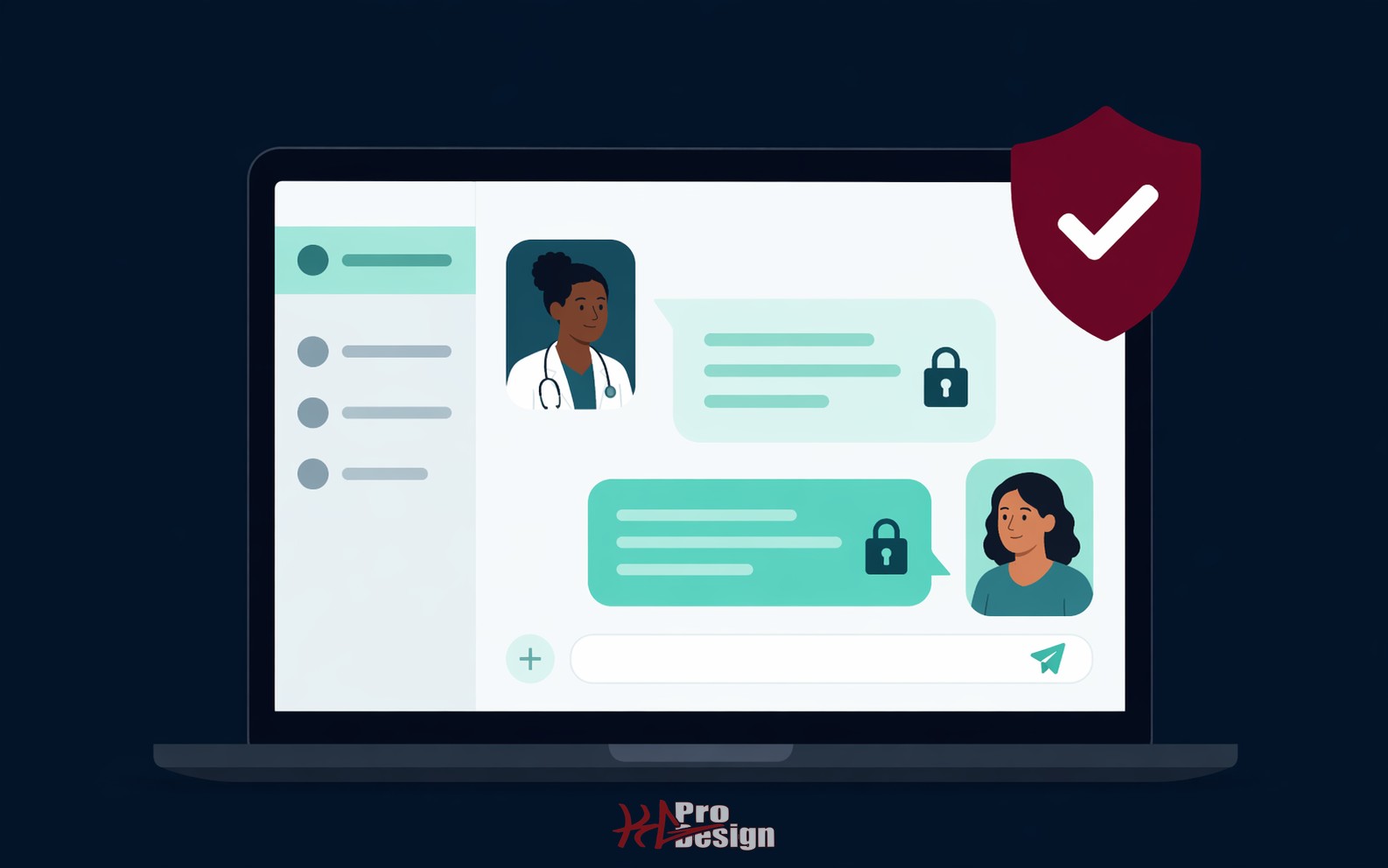
We decided to do something about it. KG ProDesign built a pilot of a HIPAA-compliant automated messaging platform designed specifically for home care nursing agencies. The platform automates patient outreach via SMS and voice calls one to two days before a scheduled visit, seeking confirmation and freeing nurses to focus on patient care. This article documents what we built, the compliance decisions we made along the way, and the lessons we learned during the pilot.
The Problem in Detail
Home care nursing agencies typically manage dozens or hundreds of patient visits per day across a roster of field nurses. Each visit must be confirmed in advance. Patients need to know when to expect the nurse. The agency needs to know the patient will be home. Without confirmation, a nurse might drive thirty minutes to a home only to find the patient is not there, wasting time that could have been spent with another patient.
The confirmation process at most agencies looks something like this:
- Evening before: A coordinator or the nurse themselves reviews the next day's schedule and begins calling or texting each patient to confirm.
- Morning of: Follow-up calls go out to patients who did not respond the night before.
- During the day: If a patient cancels or does not answer, the schedule has to be rearranged in real time.
This process is almost entirely manual. Some agencies use basic scheduling software, but the outreach itself -- the calls and texts -- is done by hand. Nurses and coordinators report spending anywhere from thirty minutes to two hours per day on confirmation calls alone, depending on their patient load.
The inefficiency is compounded by the fact that many patients are elderly or have conditions that make them difficult to reach. Calls go to voicemail. Texts go unanswered. The nurse tries again. And again. The time adds up.
Why We Built It
We saw an opportunity to apply automation to a problem that was both well-defined and high-impact. Automated appointment reminders are common in other areas of healthcare -- dental offices, primary care clinics, and specialty practices have used them for years. But the home care nursing space has been slower to adopt these tools, partly because of the complexity of home visit scheduling and partly because of HIPAA concerns around patient data.
That HIPAA dimension is what made this project interesting to us. It is not enough to send a text message. You have to send it in a way that does not reveal protected health information. You have to store patient contact details and visit schedules securely. You have to log every interaction for audit purposes. And you have to ensure that every third-party service in the chain -- the telephony provider, the database, the API layer -- meets HIPAA requirements and has a signed Business Associate Agreement in place.
We wanted to prove that a small, focused team could build a compliant automated messaging system for this use case without the overhead and cost of enterprise healthcare IT vendors. So we built a pilot.
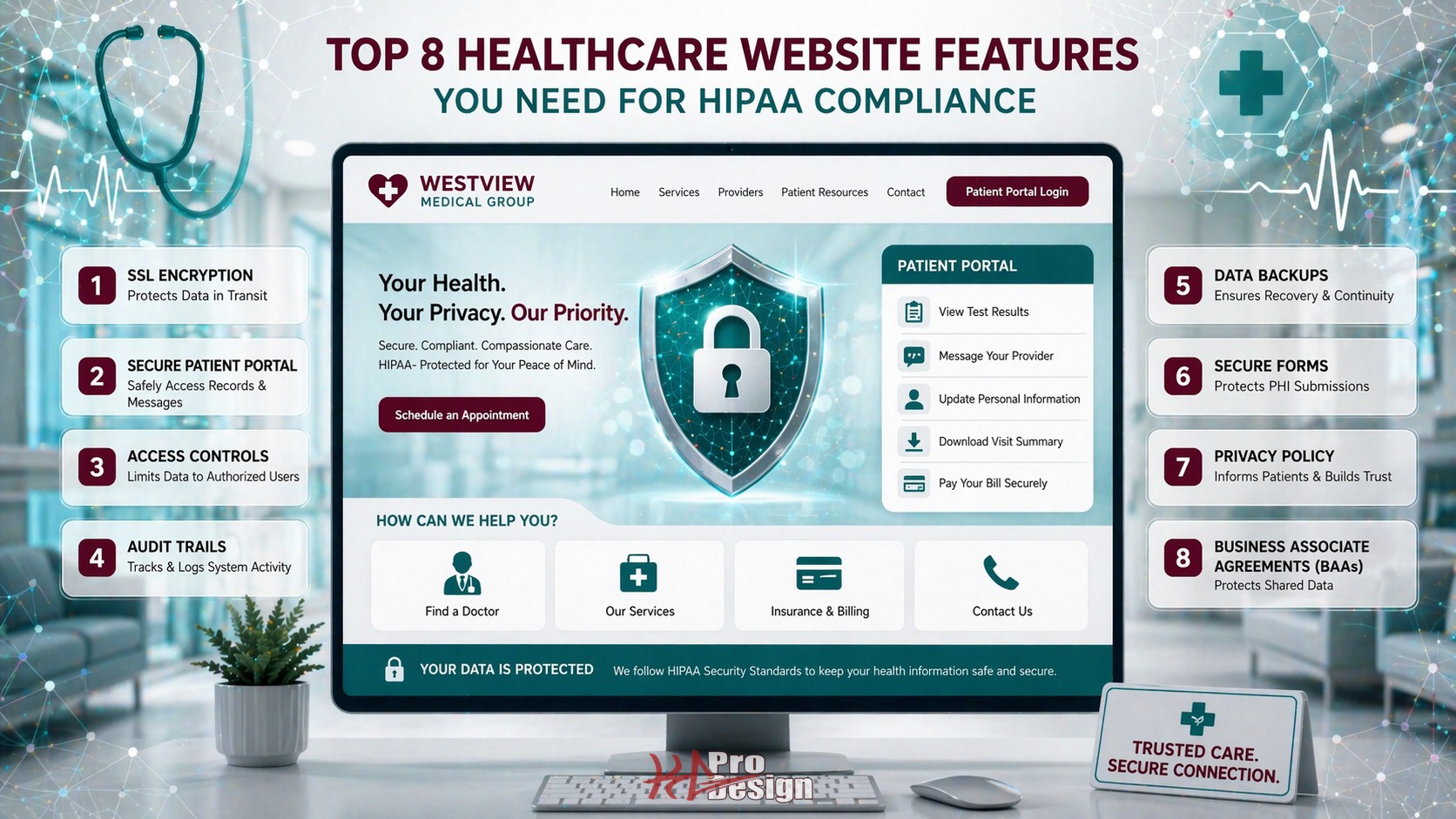
If you are working in healthcare tech or evaluating compliance requirements for a health-related application, our article on the top 8 healthcare website features for HIPAA compliance covers the broader landscape of building compliant digital experiences.
Architecture and Compliance Decisions
Every architectural decision in this pilot was filtered through a single question: does this maintain HIPAA compliance without sacrificing usability? Here is how we approached the major decision points.
Encryption at Rest and in Transit
All patient data -- names, contact information, visit schedules, and confirmation statuses -- is encrypted at rest using AES-256 encryption. All data in transit is protected by TLS 1.2 or higher. This applies to every layer of the system: the database, the API, the communication between our platform and third-party services, and the web interface used by agency staff. There are no exceptions. Even internal service-to-service communication within the platform uses encrypted channels.
Telephony Provider and BAA Requirements
Automated SMS and voice calls require a telephony provider. We selected Twilio as the provider for the pilot based on their willingness to sign a Business Associate Addendum (their equivalent of a BAA), their documented HIPAA compliance posture, and their robust API for both programmable SMS and programmable voice.
The BAA was non-negotiable. Under HIPAA, any third party that handles, transmits, or stores PHI on your behalf must sign a BAA. Without it, the covered entity -- in this case, the home care agency using our platform -- would be exposed to significant regulatory risk. We verified that Twilio's BAA covered both their SMS and voice services before writing a single line of integration code.
Message Content Design: The PHI Boundary
This was one of the most consequential design decisions in the entire pilot. SMS messages and voice calls are inherently insecure delivery channels. A text message can be read by anyone who picks up the patient's phone. A voice call can be overheard or played on speakerphone. Under HIPAA, the content of these messages must not reveal protected health information.
That means our automated messages cannot say things like "This is a reminder for your nursing visit for wound care tomorrow at 2 PM." The mention of nursing, wound care, or any clinical detail constitutes PHI.
Instead, we designed messages to be deliberately generic:
- SMS example: "You have an appointment scheduled for tomorrow. Please reply YES to confirm or NO to reschedule."
- Voice call example: "This is a reminder that you have an appointment scheduled for tomorrow. Press 1 to confirm or press 2 to reschedule."
No provider name. No clinical details. No indication of what type of appointment it is. The message confirms the existence of a scheduled event without disclosing anything about its nature. If the message is seen or heard by someone other than the patient, it reveals nothing about their health status or care.
This was a deliberate tradeoff. More specific messages would be more helpful to the patient, but specificity introduces PHI disclosure risk. For the pilot, we erred on the side of caution and kept messages as minimal as possible.
Secure API Design
The platform exposes a RESTful API that home care scheduling systems can use to push visit schedules into our system. Every API endpoint requires authentication via short-lived tokens. Rate limiting is enforced to prevent abuse. Input validation and sanitization are applied to every request to guard against injection attacks.
The API is designed to accept the minimum data necessary. We do not ingest clinical notes, diagnoses, or treatment plans. The platform only needs the patient's name, contact information, visit date and time, and the assigned nurse. This principle of minimum necessary information is a core HIPAA requirement, and we applied it at the API boundary to reduce the scope of data we are responsible for protecting.
Access Controls
Not everyone in a home care agency needs to see every patient's information. The platform implements role-based access control with three tiers:
- Administrator: Full access to all patient data, schedules, confirmation logs, and system configuration.
- Coordinator: Access to schedules and confirmation statuses for patients within their assigned region or team. Cannot modify system configuration.
- Nurse: Access only to their own patient schedule and confirmation statuses. Cannot view other nurses' patients.
Every access event is logged. If a coordinator views a patient record, that access is recorded with a timestamp, the user's identity, and the specific record accessed. This audit trail is essential for HIPAA compliance investigations and routine audits.
Audit Logging
HIPAA requires that covered entities and their business associates maintain logs of who accessed what data and when. Our pilot logs every meaningful system event:
- Outreach events: Every SMS sent, every voice call placed, including the timestamp, the recipient (stored as a hashed identifier in the log, not the raw phone number), the message template used, and the delivery status.
- Confirmation responses: Every patient reply, including the response content and timestamp.
- Data access: Every time a user views, creates, modifies, or deletes a patient record or schedule entry.
- Authentication events: Every login, logout, and failed authentication attempt.
- System changes: Configuration modifications, role assignments, and template updates.
Logs are stored in an append-only format. They cannot be modified or deleted by any user, including administrators. Retention policies are configurable per agency, with a default retention period that aligns with HIPAA's six-year minimum for compliance documentation.
Data Retention and Deletion
HIPAA does not prescribe a single data retention period -- it varies by state and by the type of data. Our platform supports configurable retention policies that allow each agency to set their own retention windows. When data reaches the end of its retention period, it is soft-deleted first, giving administrators a grace period to recover it if needed, and then permanently purged after the grace period expires.
Patients also have the ability to request deletion of their contact information from the platform. When a deletion request is processed, the system removes the patient's PII from active records while preserving anonymized audit log entries to maintain compliance documentation integrity.
The Pilot Build
The pilot was scoped deliberately. We wanted to prove the core value proposition -- automated, HIPAA-compliant patient outreach -- without over-engineering a first version that would never ship.
What We Built
- Scheduling ingestion API: Accepts visit schedule data from external systems via a secure REST API.
- Automated SMS outreach: Sends confirmation requests via text message the evening before a scheduled visit.
- Automated voice call outreach: Places voice calls the morning of the visit to patients who did not respond to the SMS.
- Response processing: Captures patient confirmations and cancellations from SMS replies and voice call keypad inputs.
- Staff dashboard: A web-based interface where coordinators and nurses can view confirmation statuses, see which patients have not responded, and manually follow up where needed.
- Audit log viewer: A read-only interface for administrators to review system activity for compliance purposes.
What We Did Not Build (Yet)
- Direct EHR integration: The pilot uses a standalone API rather than integrating directly with electronic health record systems. Full EHR integration is planned for a future phase.
- Two-way conversational messaging: The current system handles structured confirmations (yes/no/reschedule) but does not support free-form text conversations with patients.
- Multi-language support: The pilot operates in English only. Multi-language message templates are on the roadmap.
- Automated rescheduling: When a patient cancels, the system notifies the coordinator. Automated rescheduling logic -- finding an open slot and proposing a new time -- is a future enhancement.
We were intentional about these boundaries. A pilot that tries to do everything is a pilot that ships nothing.
Lessons Learned
Building this pilot reinforced several principles that apply broadly to healthcare software development and to any project where regulatory compliance is a first-order concern.
HIPAA Compliance Is a Design Constraint, Not a Checklist
It is tempting to treat HIPAA as a list of boxes to check at the end of a project. That approach fails. Compliance has to be a design constraint from the very first architecture discussion. Every decision about data storage, message content, access control, and third-party integration is a compliance decision. If you defer those considerations, you end up rebuilding foundational components, which is far more expensive than getting them right the first time.
The Minimum Necessary Principle Simplifies Everything
HIPAA's minimum necessary standard -- only collect, use, and disclose the minimum amount of PHI required to accomplish the task -- is often framed as a restriction. In practice, it is a simplification. By limiting the data our platform ingests to only what is needed for scheduling and outreach, we reduced our compliance surface area, simplified our data model, and made the system easier to secure. Less data means less risk.
Message Content Is the Hardest Problem
The technical challenges of encryption, access control, and audit logging are well-understood. The harder problem was designing message content that is useful to the patient while revealing nothing about their health status. This required multiple iterations and careful review. It is an area where healthcare domain expertise matters as much as engineering skill.
BAAs Take Time
Negotiating and executing Business Associate Agreements with third-party providers is not instant. Twilio's process was straightforward relative to others in the industry, but it still required lead time. Any healthcare project that depends on third-party services should start the BAA process early -- ideally before development begins on the integration.
Audit Logging Pays for Itself
Comprehensive audit logging initially felt like overhead. In practice, it became one of the most valuable features of the pilot. It gave us confidence that the system was operating correctly. It provided a clear record for compliance discussions. And it surfaced usage patterns that informed our design decisions for future iterations.
What Is Next
The pilot validated the core concept: automated, HIPAA-compliant patient outreach for home care agencies is technically feasible, operationally valuable, and achievable without enterprise-scale budgets. The next steps are focused on expanding the platform's capabilities and moving toward production readiness.
- EHR integration: Building direct integrations with popular home care scheduling and EHR systems to eliminate manual data entry.
- Multi-language support: Adding Spanish language templates as the first expansion, with a framework for additional languages.
- Intelligent escalation: Using response patterns to automatically escalate unreachable patients to human follow-up, with configurable escalation rules.
- Analytics dashboard: Providing agencies with metrics on confirmation rates, response times, and no-show reduction to quantify the platform's impact.
We are continuing to develop this platform because we believe the home care nursing industry deserves better tools. The work these nurses do is critical, and anything that gives them back time to spend with patients rather than on the phone is worth building.
If your organization operates in healthcare and is exploring automation and AI solutions to streamline operations, we would welcome the conversation. The compliance landscape can feel daunting, but with the right approach, it is entirely manageable.
Ready to Build Something That Matters?
At KG ProDesign, we build software that solves real problems for real businesses -- including in regulated industries where compliance is not optional. Whether you are exploring automated patient communication, building a HIPAA-compliant application, or looking to modernize a manual process in your healthcare organization, we can help you navigate the technical and regulatory challenges.
Contact us to start the conversation, or learn more about our software development services.